Picking out the best Cold Room Condensing Unit for sale in 2026 isn’t just about the product listing—it really starts with understanding your room first. Things like storage temperature, room size, insulation quality, how often the door opens, and the local weather all play a big role in determining what cooling capacity you actually need. Just because a unit seems powerful on paper doesn’t guarantee it’ll perform well—especially if warm air keeps sneaking in or you’re storing fresh produce. Those small details? They matter more than you might think.
This guide is here to help you focus on the practical stuff you should compare before reaching out for a quote. Things like cooling capacity, refrigerant compatibility, Compressor type, how much energy it uses, the operating temperature range, noise levels, and how easy it is to get to service parts. Make sure to compare the manufacturer’s technical data with your actual room load, and don’t forget to ask how it’ll handle hot weather. Relying on horsepower alone? That’s usually not enough — it rarely tells the full story.
And don’t forget about installation conditions either. You want to check that the Condenser has enough airflow around it and that your technicians can easily access filters, electrical connections, and service valves. It’s also smart to ask about warranty details, whether spare parts are readily available, and what kind of support you can expect in your area. Because, honestly, a bargain price might look tempting, but if a common part takes weeks to replace, it’s not really a deal. That said, a high-end model isn’t always the best choice either—there’s no one-size-fits-all perfect unit. Remember, factors like how you use the room, your maintenance routine, and your budget can change what’s ideal. Use the points in this guide as a shortlist, then double-check your final choice with a qualified refrigeration professional. Keep in mind, real-world conditions can sometimes surprise you compared to your estimates—that’s just part of the game.
What Is a Cold Room Condensing Unit?
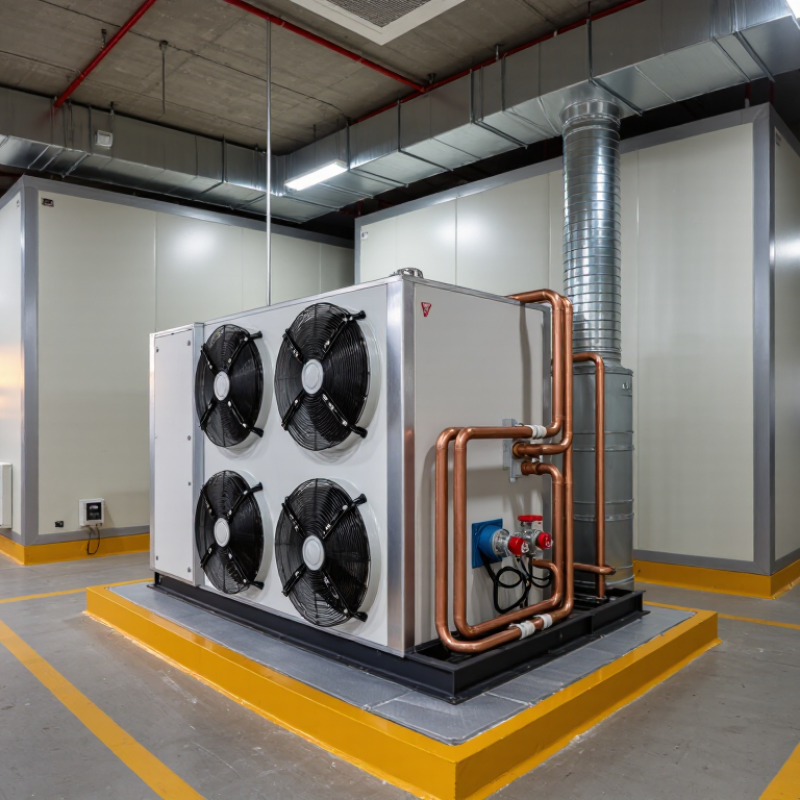
A Cold Room condensing unit is the outdoor or machine-room assembly that moves heat out of a refrigerated space. It typically includes a compressor, condenser coil, fan, and controls. Refrigerant carries heat from the evaporator inside the room to the condenser, where the fan helps release it into the surrounding air. The compressor keeps this cycle moving. In practical terms, it is the part you may hear humming beside a storage room on a warm afternoon. The evaporator and expansion device are usually separate components, even though they work as part of the same refrigeration system.
Choosing a unit involves more than matching the room’s dimensions. Stored products, door openings, insulation, local temperatures, and required holding temperature all affect capacity. A Fresh Condensing Unit Cold Room selection should also consider airflow and service access; a condenser boxed into a tight corner may struggle to shed heat. Check the equipment data and have a qualified refrigeration professional verify the load and refrigerant requirements. That check matters. A common mistake is choosing extra capacity as a shortcut, but oversized equipment can cycle poorly under light loads. Even careful estimates can miss real operating habits, such as frequent deliveries. Measure, observe, and revisit assumptions before settling on a configuration.
How a Cold Room Condensing Unit Works
A cold room condensing unit moves heat; it does not create cold. Inside the room, the evaporator absorbs heat as liquid refrigerant boils into vapor. A fan draws warm air across its fins, where frost can slowly build. The compressor then raises the vapor’s pressure and temperature, pushing it toward the outdoor condenser.
At the condenser, outdoor air carries heat away, and the refrigerant turns back into liquid. An expansion valve lowers its pressure before it returns to the evaporator. The cycle repeats. Small details matter: blocked condenser fins, poor airflow, or a door left ajar can increase operating strain. The International Institute of Refrigeration’s 2019 report, The Role of Refrigeration in the Global Economy, estimates that refrigeration accounts for about 20% of worldwide electricity use. That makes correct sizing and clean heat-transfer surfaces practical priorities, not cosmetic ones.
In practice, the cycle looks tidy on paper; real rooms are less tidy. A warm product load, humid air, or frequent door openings can change the cooling demand. Check airflow, coil condition, and operating temperatures under real conditions. A unit that seems adequate during an empty-room test may struggle after stock arrives. That distinction is easy to overlook.
Main Components and Their Functions
2026 Best Cold Room Condensing Unit for Sale?
Main Components and Their Functions
A cold-room condensing unit moves heat out of the room, but each component has a specific job. The compressor raises refrigerant pressure and temperature. The condenser coil then releases heat to outdoor air, while its fan helps carry that heat away. On a hot afternoon, a blocked coil or failing fan can make pressures climb and cooling weaken. Small details matter.
Many units also include a liquid receiver, filter-drier, and pressure controls. The receiver stores liquid refrigerant during changing load conditions. The filter-drier traps moisture and particles that could damage the system. Controls monitor operating pressure and help stop unsafe conditions. The International Institute of Refrigeration’s 2022 report estimates refrigeration uses about 17% of global electricity and contributes roughly 7.5% of greenhouse gas emissions. These figures make efficient component selection and routine coil cleaning important. Still, the right unit depends on room size, insulation, product load, and ambient temperature; a neat specification sheet cannot replace a proper heat-load calculation.
Tip: Keep condenser airflow clear, check for oily marks near joints, and record operating pressures during service. Do not guess. Even experienced technicians can overlook a dirty coil or incorrect sensor reading.
How to Choose the Right Capacity and Configuration
Choosing the right capacity starts with the room, not the catalog. Measure its internal dimensions and estimate how much product enters each day. A small room holding warm produce may need more cooling than a larger room storing already chilled goods. Account for door openings, insulation, lighting, and the local summer design temperature. These details change the heat load. Guessing from floor area alone is tempting, but it can lead to slow pull-down or unnecessary energy use.
A Frozen Condensing Unit Cold Room setup should match the evaporator, refrigerant circuit, and operating temperature. For frozen storage, check the required room temperature and product pull-down time with a qualified refrigeration technician. For chilled storage, the same unit may be unsuitable. Configuration matters, too. Remote condensing units can reduce equipment noise inside the building, while packaged arrangements may simplify installation where space allows. Check pipe length, airflow clearance, electrical supply, and service access before choosing. A unit boxed into a tight corner may struggle.
Leave room for real operating conditions. Seasonal peaks and frequent deliveries can push demand above a simple estimate. I have seen projects rely on optimistic door-use assumptions; that is easy to overlook. Ask the supplier for a heat-load calculation with stated assumptions, then compare it with your actual stock and workflow. The estimate may still need adjustment. That is worth discussing before purchase.
2026 Best Cold Room Condensing Unit for Sale? How to Choose the Right Capacity and Configuration
Indicative refrigeration capacity by cold-room volume
Planning estimates use 100 W/m³ for chilled rooms and 150 W/m³ for frozen rooms. These are preliminary allowances, not equipment ratings or a substitute for a heat-load calculation. Final capacity depends on room insulation, target temperature, ambient conditions, product pull-down, and door openings. Select a condensing unit rated at the actual design operating conditions, then match it with a compatible evaporator and refrigerant configuration.
Features to Compare in 2026 Models
In 2026, compare cold-room condensing units by how they perform under your actual operating conditions, not by headline capacity alone. Check the rated capacity at your room temperature, outdoor temperature, and refrigerant conditions. A unit rated for a mild test environment may struggle during a hot afternoon or frequent door openings. Match its capacity to the room’s insulation, product load, and daily use. Close enough is not always close enough.
Look closely at compressor efficiency, fan control, and defrost compatibility. Variable-speed control can help when cooling demand changes, while well-matched fans may reduce noise near work areas. Ask for energy data at more than one operating point; a single rating rarely tells the whole story. Also verify refrigerant compatibility with the evaporator and existing controls. Small mismatches can cause poor performance. They happen.
Service access matters, too. Check whether technicians can reach electrical panels, valves, and coil connections without moving nearby equipment. Review alarm functions, controller readability, and available temperature records. A clear display is useful when staff need to spot a rising room temperature quickly. Compare sound levels if the unit sits near occupied spaces. I would also leave some room for imperfect estimates: real loading patterns are rarely as tidy as a spreadsheet.
Pricing, Installation, and Maintenance Considerations
2026 Best Cold Room Condensing Unit for Sale? Pricing, Installation, and Maintenance Considerations
Pricing a 2026 cold-room condensing unit starts with the room’s heat load, not the sticker price. Room dimensions, insulation, door traffic, product pull-down, and peak outdoor temperature all affect capacity. Ask for an itemized quote covering the unit, controls, refrigerant, delivery, commissioning, and warranty. Compare performance at matching operating conditions; otherwise, two prices may not describe equivalent equipment. The International Institute of Refrigeration’s 2019 report estimates refrigeration uses about 17% of global electricity. That broad figure is not a cold-room forecast, but it makes efficiency worth weighing against purchase cost. Budget varies.
Installation needs unobstructed airflow, secure pipe supports, correctly sized electrical supply, and a drain that will not freeze. Leave service access around the unit; a tightly boxed installation can turn a simple repair into expensive downtime. Have a qualified technician verify refrigerant charge, operating pressures, and temperature controls during commissioning. For maintenance, schedule coil cleaning, inspect fan motors and electrical connections, and check door seals for gaps. Record room temperature and alarm events, especially after heavy deliveries. Even careful sizing is not perfect. Door habits are easy to underestimate, so review actual usage after the first busy season. This helps determine whether the Refrigeration Condensing Unit Cold Room is holding temperature efficiently or cycling too often.
Where to Buy and What to Check Before Purchase
For a 2026 purchase, compare specialist refrigeration suppliers, established equipment distributors, and qualified local contractors. Ask who handles installation, commissioning, and service after delivery. A nearby supplier may respond faster when a component fails. Cheap can mislead. Request a written quotation listing the unit model specifications, included controls, delivery terms, warranty coverage, and spare-parts availability.
Match the condensing unit’s capacity to the room’s dimensions, insulation, door openings, stored products, and expected pull-down time. Ask for capacity data at your actual operating temperatures and local outdoor design conditions, not just a headline rating. Confirm the refrigerant, power supply, phase, and frequency. A 50 Hz Cold Room Condensing Unit must match the site’s electrical supply and the connected evaporator. Check pipe-length limits, defrost controls, airflow clearance, and operating noise. Don’t assume a familiar connection means compatibility.
Before paying, compare the quotation with the technical datasheet and ask the supplier to explain any unclear ratings. Request references for similar cold-room installations, plus a clear commissioning checklist. A reliable seller should discuss practical constraints, not only price. I would also confirm who diagnoses faults and how quickly parts can be shipped. It is easy to overlook service access; leave enough space around the unit for cleaning and maintenance.
FAQS
It moves heat out of the refrigerated room. The compressor circulates refrigerant, while the condenser releases heat into surrounding air.
Common parts include a compressor, condenser coil, fan, and controls. Some units also have a receiver, filter-drier, and pressure controls.
Usually not. The evaporator and expansion device are separate components, but they work with the unit as one refrigeration system.
Consider room dimensions, insulation, stored products, door openings, and outdoor temperatures. Have a qualified refrigeration professional check the heat load. Guessing can miss frequent deliveries.
Extra capacity is not always helpful. An oversized unit may cycle poorly when the cooling load is low.
Look for clear airflow around the condenser coil and confirm the fan works. A blocked coil can weaken cooling. Small details matter.
Check capacity at your actual room and outdoor temperatures. Compare compressor efficiency, fan control, refrigerant compatibility, and energy data at multiple operating points.
Technicians should be able to reach panels, valves, and coil connections. Check that alarms and temperature records are easy to read. Access matters.
Probably not. Real loading patterns can differ from a spreadsheet, especially when doors open often. Recheck assumptions after observing daily use.
Conclusion
A Cold Room Condensing Unit removes heat from a refrigerated space by circulating refrigerant through a system that compresses, condenses, and releases heat before the refrigerant returns to absorb more warmth. Its compressor, condenser, fan, controls, and related components work together to maintain the temperature needed for the room’s intended use. Understanding how these parts function makes it easier to compare equipment and plan for reliable operation.
When selecting a unit in 2026, match its capacity and configuration to the room’s dimensions, insulation, expected product load, ambient conditions, and target temperature. Compare features such as energy efficiency, control options, operating range, and ease of servicing. Also consider the total cost, including installation and ongoing maintenance, rather than focusing only on the purchase price. Before buying, confirm the specifications, included components, installation requirements, warranty terms, and availability of technical support so the unit suits your site and long-term needs.