Leave Your Message
Picking the right Cold Room Air Coolerin 2026 isn't just about comparing how much cooling power it has or how much it costs. Honestly, there's more to it—think about different room sizes, how hot or humid the environment is, what kind of power supply you’ve got, and how easy it is to keep the unit running smoothly. This guide breaks down the main types of Air Coolers you're likely to encounter in cold rooms, like evaporative, forced-air, industrial, portable, and energy-efficient models.
Conditions can vary a lot. What works great in a dry storage warehouse might totally flop in a humid coastal facility. Evaporative coolers are pretty efficient, but they really rely on good water quality and decent airflow. On the other hand, forced-air units often provide better circulation around stored items—especially important if you need stable temps. Portable models are perfect if you're dealing with temporary setups, while big industrial systems are designed for larger spaces and tougher workloads.
Here's the thing—details matter. When you’re evaluating equipment, don’t just look at specs like cooling capacity or fan speed. Think about noise levels, water use, how resistant it is to rust or corrosion, how easy it is to clean, and whether spare parts are easy to find. You also wanna consider the installation spot—an overpowered machine might not perform well if airflow’s blocked by stacked boxes or tight aisles. It might seem obvious, but sometimes that’s overlooked.
This overview combines technical comparisons, hands-on experience, and what buyers really care about to help you make smarter choices. It’s not about saying one design’s the best for everyone because every situation’s different. Things like climate, what you’re cooling, how long it runs, and service options all influence what’s best. And hey, even the specs on paper need to be checked out in the real world—so make sure to verify performance, safety info, warranty details, and regional requirements before you buy. At the end of the day, it’s about finding a cooler that keeps conditions steady, isn’t costly to operate, and can be reliably serviced down the line. Mistakes happen, but a careful choice can save you a lot of headaches.
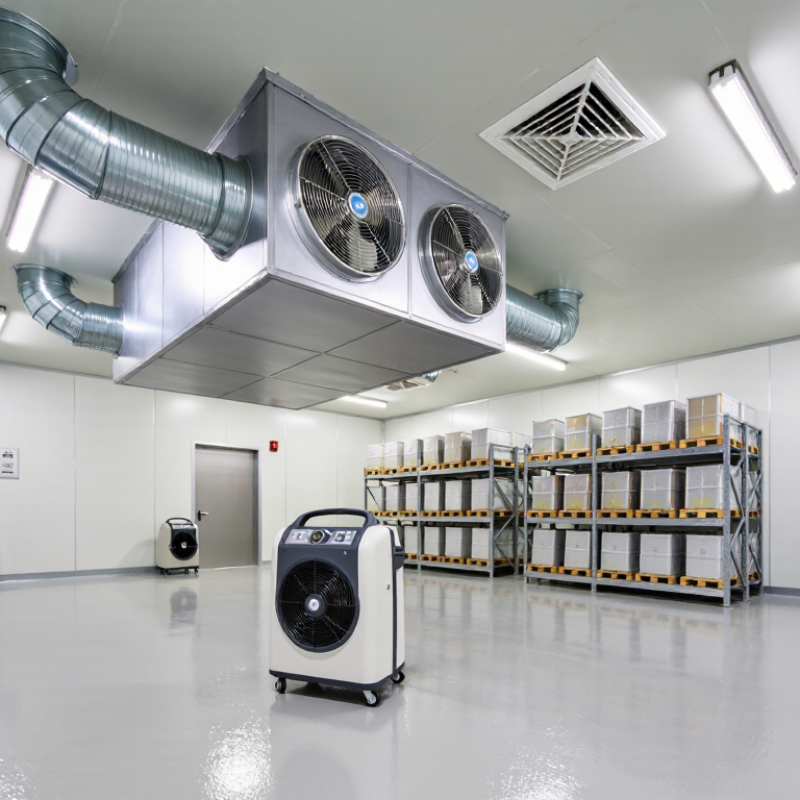
A cold room air cooleris the Evaporator unit installed inside a refrigerated space. It removes heat from stored products and room air. The unit usually contains copper tubes, aluminum fins, a fan, and a drain pan.
Refrigerant enters the evaporator at low pressure. It absorbs heat while changing from liquid to vapor. The compressor then raises vapor pressure and temperature. The condenser rejects heat outdoors. Finally, the expansion valve lowers refrigerant pressure again.
Forced-air coolers provide faster temperature recovery than static units. Static designs reduce air movement and may protect delicate products. Low-temperature models need stronger frost control and reliable defrost cycles.
ASHRAE Handbook—Refrigeration 2022 stresses correct airflow, load calculation, and evaporator selection. Poor selection creates dry surfaces, uneven temperatures, or excessive energy use.
FAO reported that about 14% of food is lost between harvest and retail. Stable cooling can reduce some losses, but it cannot fix poor handling.
Tips:
Measure product load, door openings, room volume, and target humidity before ordering. Keep airflow clear around cartons. Check drain heaters in freezing conditions.
UNEP’s 2023 Cooling Emissions Gap report warns that global cooling demand may more than triple by 2050. Efficiency matters, though the most efficient unit is not always the best fit.
This is where buyers sometimes oversimplify. Commissioning records should verify air temperature at several points, not only beside the sensor.
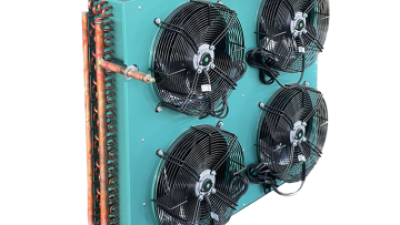
The FNH open-type condenser is a practical choice for cold-storage projects that require stable heat rejection, efficient operation, and straightforward maintenance. Supplied directly by an experienced China factory, this traditional condenser design uses a built-in fan to move ambient air across the coil, removing heat from the refrigerant vapor and converting it into liquid. When properly matched with the evaporator, expansion device, and compressor, it supports consistent cabinet temperatures and dependable refrigeration performance.
Energy efficiency is increasingly important in cold-chain construction. The International Institute of Refrigeration estimates that refrigeration accounts for approximately 17% of global electricity consumption, while UNEP and IEA reports indicate that cooling demand could more than triple by 2050 without improved equipment and system design. For this reason, selecting a condenser with effective airflow, adequate heat-transfer capacity, and durable construction can help reduce excessive compressor workload and operating costs.
FNH condensers are suitable for cold rooms, food-storage facilities, logistics warehouses, and other commercial refrigeration applications. A reliable factory supplier can provide different coil sizes, fan configurations, connection specifications, and packaging options to match project requirements. Quality control during tube expansion, leak testing, fan assembly, and protective finishing also helps maintain long-term reliability in demanding storage environments. Availability of technical support and replacement components further assists installers and operators during commissioning and routine service.
Measure room volume, target temperature, humidity, product load, and door-opening frequency. Record seasonal outdoor temperatures. Measure twice. These details determine the real heat load.
No. Oversized equipment may increase cycling, energy use, and temperature swings. Match evaporator capacity to the actual heat load. Catalogue images cannot confirm suitability.
Strong airflow can cool products quickly. It may also dry uncovered food. Use suitable airflow for the product surface and packaging. Check airflow measurements under stated test conditions.
Close fin spacing can support wet-room performance. Wider spacing can reduce frost buildup in freezing rooms. The wrong spacing may increase cleaning and defrost work.
Confirm voltage, frequency, phase, motor protection, and control compatibility. Request clear wiring diagrams for local technicians. Electricity quality can change real-world reliability.
Compare energy use, defrost losses, cleaning time, and fan replacement costs. Poor door seals can waste more energy than advanced equipment saves. Purchase price is only one piece.
Check climate impact, leakage risks, recovery procedures, and local requirements. Some systems require trained technicians and suitable service equipment. Availability matters during an unexpected repair.
Request performance records, material certificates, installation drawings, refrigerant documents, and spare-parts information. Ask how testing was performed. Numbers without conditions can mislead.
Inspect drain design, coil access, fan condition, door seals, and defrost timing. Standing water can create repeated service work. Keep cleaning and leak-check records.
No. Climate, room size, product type, electricity quality, and technician skills vary. I would not pretend one design fits every market. Recheck assumptions after a site survey.
A Cold Room Air Cooler is a key component in temperature-controlled storage, designed to remove heat from insulated rooms and maintain stable conditions for products such as food, pharmaceuticals, and other temperature-sensitive goods. This overview explains the main cooler types used in cold storage, including air-cooled systems suited to different room sizes, temperature ranges, humidity levels, and airflow requirements. It also highlights how proper equipment matching helps reduce moisture loss, frost formation, and uneven cooling.
For global buyers, important selection factors include cooling capacity, energy efficiency, refrigerant choice, operating environment, noise levels, and compliance with applicable safety standards. The article also considers installation space, airflow distribution, maintenance access, service life, and total ownership costs. By evaluating performance, environmental impact, reliability, and long-term operating expenses together, buyers can select a practical air-cooling solution that supports product quality, efficient operation, and dependable cold room performance.