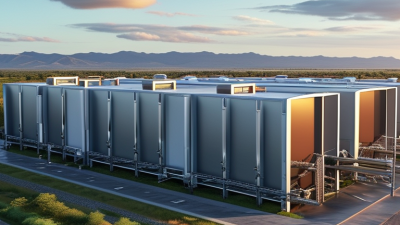
Choosing a Commercial Condensing Unit has kind of become a real test of a refrigeration pro's skills. Think about supermarkets, restaurants, cold storage, and distribution centers—they all need reliable cooling around the clock. Plus, they’ve got to meet energy goals, keep noise levels in check, deal with refrigerant updates, and follow demanding maintenance routines. On paper, a compact unit might look impressive, but its true performance is revealed in the real world—whether it's in a hot plant room, a busy service aisle, or a freezer door that's opening and closing all day long.
Now, Emerson’s refrigeration expert John Rhodes has a good rule of thumb: “Efficiency isn’t just about a single component; it’s about the whole system.” That’s a pretty helpful mindset when you're looking at different manufacturers from around the world. Brands like Emerson, Danfoss, Copeland, BITZER, Heatcraft, Güntner, Rivacold, and Tecumseh all have their own strengths and focus areas—they cater to different needs in the commercial refrigeration world. Their products can differ a lot—things like Compressor design, control options, condenser build, refrigerant types, and after-sales support. And those differences matter. A unit that’s perfect for a small convenience store might totally fall short in a huge regional cold storage facility.
In this comparison, I’ve looked at things like engineering quality, efficiency under real-world conditions, how reliable the products are, ease of service, and the company’s global experience. I’ve also paid attention to practical things like fan controls, corrosion protection, noise levels, how easy it is to use the controllers, and how readily spare parts are available. Of course, no comparison is perfect. Sometimes, the specs on paper don’t tell the full story because installation conditions—like climate, pipe runs, cleaning habits, or even the technician’s skills—can really influence how well things work out. That’s why it’s super important for buyers to think carefully before making a choice. The biggest or most well-known manufacturer isn’t always the best fit for every situation. Sometimes, a simpler commercial Condensing Unit can be more trouble-free than a fancy, high-tech model.
Bottom line: this guide is a helpful starting point, giving you a structured overview. But don’t forget, field testing and professional advice are still crucial to making the best decision for your specific needs.
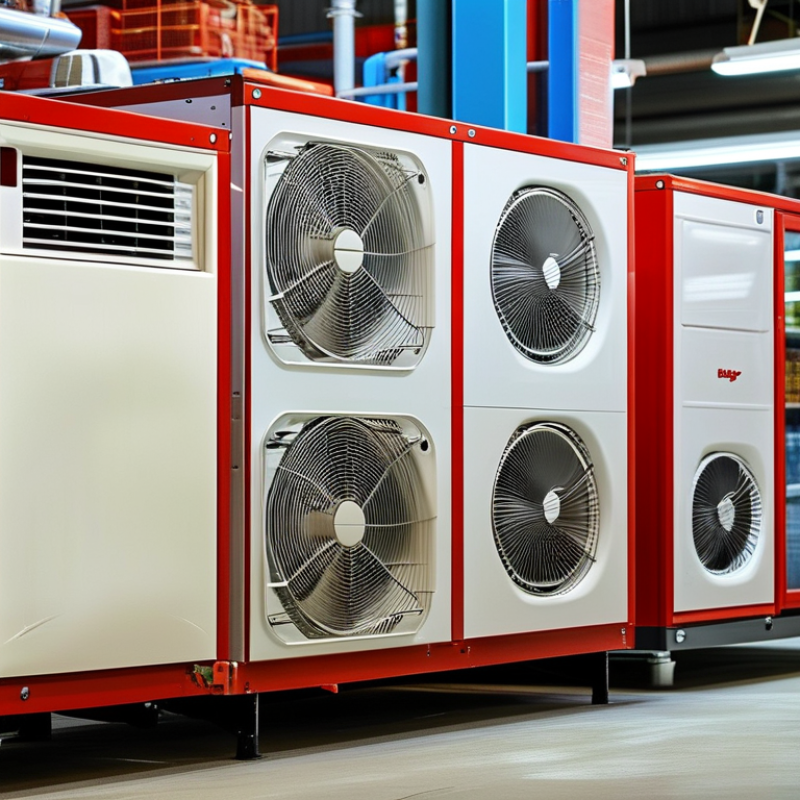
A commercial condensing unit is the outdoor mechanical package that rejects heat from a refrigeration system. It normally combines a compressor, condenser coil, fan, receiver, controls, and protective devices. The compressor raises refrigerant pressure, while the condenser releases heat into surrounding air. This arrangement serves walk-in coolers, supermarket cases, restaurants, cold rooms, and process cooling equipment. It is the system’s heat-rejection engine.
In a grocery store, one unit may support chilled display cases throughout a sales area. A restaurant may use a compact assembly for dairy storage, preparation rooms, or frozen food. Warehouses often need multiple units because door openings, product loads, and ambient temperatures change. Engineers select capacity by considering evaporating temperature, condensing temperature, refrigerant requirements, airflow, and electrical supply. An OEM Commercial Condensing Unit can be configured for specific footprints, controls, and operating conditions. Field measurements matter.
Poor airflow can raise head pressure and shorten compressor life. Dirty coils are common. Technicians should check vibration, oil condition, fan operation, wiring, and safety cutouts during service. However, selection is not always precise; future load growth is easy to underestimate. A slightly larger unit may cycle excessively, while an undersized unit may run continuously. Reliable manufacturers document testing, component compatibility, sound levels, and maintenance access before shipment. That evidence helps contractors make safer, more defensible decisions.
For buyers comparing commercial condensing unit manufacturers worldwide, understanding operation matters more than appearance. A commercial condensing unit moves heat through a sealed refrigeration circuit. The compressor draws in low-pressure refrigerant vapor from the evaporator. It compresses that vapor into a hot, high-pressure gas.
The hot gas then enters the condenser coil. Outdoor air removes heat through finned tubing and fan movement. As the refrigerant cools, it changes into a high-pressure liquid. That liquid travels through a receiver or liquid line toward the expansion device. Pressure drops sharply at the valve, creating a colder refrigerant mixture.
It starts here. The evaporator absorbs heat from a refrigerated room, display case, or process area. The refrigerant boils and returns as vapor to the compressor. The cycle repeats continuously.
Technicians inspect these units under real operating conditions. They check suction pressure, discharge temperature, airflow, superheat, and electrical current. A clean coil can improve heat rejection. Blocked fins can raise head pressure and increase energy use. Small errors compound.
Correct sizing remains critical. An oversized compressor may cycle frequently and control moisture poorly. An undersized unit may run continuously during peak loads. Door openings, product temperature, ambient heat, and defrost schedules all affect selection. Some assumptions fail in the field. Actual measurements should challenge the design, not merely confirm it.
| System Category | Typical Application | Common Refrigerant Families | Typical Evaporating Temperature | Typical Cooling Capacity | Main Heat-Rejection Method | Key Operating Characteristics |
|---|---|---|---|---|---|---|
| Medium-Temperature Air-Cooled Unit | Display cases, beverage coolers, dairy storage, and small walk-in coolers | HFC, HFO, lower-GWP blends, and hydrocarbon refrigerants where permitted | Approximately −10°C to +5°C | Approximately 1 to 30 kW | Air flowing across a finned condenser coil | The compressor raises refrigerant pressure and temperature; the condenser releases heat to outdoor air and converts vapor into liquid. |
| Low-Temperature Air-Cooled Unit | Frozen-food rooms, ice makers, and low-temperature storage facilities | Low-temperature HFC/HFO blends, carbon dioxide, ammonia, and hydrocarbons where appropriate | Approximately −40°C to −20°C | Approximately 2 to 25 kW | Air-cooled finned condenser | Requires a larger compression ratio than medium-temperature service, so discharge temperature, oil return, and compressor cooling require careful control. |
| Water-Cooled Condensing Unit | Retail refrigeration, food-processing rooms, and buildings with limited outdoor airflow | HFC, HFO, carbon dioxide, ammonia, and other refrigerants approved for the installation | Approximately −40°C to +5°C | Approximately 5 to 150 kW | Water circulated through a shell-and-tube or brazed-plate heat exchanger | Water removes condenser heat efficiently, but the system needs a reliable water circuit, flow protection, water treatment, and freeze protection where required. |
| Semi-Hermetic Compressor Unit | Supermarkets, cold rooms, process cooling, and medium-sized commercial systems | HFC/HFO blends, carbon dioxide, and other refrigerants matched to compressor design | Approximately −40°C to +10°C | Approximately 10 to 250 kW | Air-cooled or water-cooled condenser | The motor and compressor are housed in a serviceable sealed shell. Multiple cylinders can provide stable capacity across a broad operating range. |
| Scroll Compressor Unit | Convenience stores, restaurants, packaged cold rooms, and compact commercial refrigeration | HFO blends, HFC/HFO transition refrigerants, and other approved refrigerants | Approximately −35°C to +10°C | Approximately 2 to 80 kW | Usually air-cooled; water-cooled versions are also available | Two interleaved scrolls compress refrigerant continuously. Fewer moving parts can support low vibration and compact equipment design. |
| Variable-Capacity Unit | Systems with changing loads, including supermarkets and multi-zone refrigeration | Refrigerant selected according to local regulations, safety classification, and system pressure | Approximately −40°C to +10°C | Approximately 5 to 200 kW | Air-cooled or water-cooled condenser | Capacity is adjusted using inverter speed control, digital unloading, cylinder unloading, or multiple compressors to reduce cycling and improve part-load control. |
| Transcritical Carbon Dioxide Unit | Supermarkets, distribution centers, and applications requiring a low-GWP refrigerant | Carbon dioxide, R744 | Approximately −45°C to −5°C | Approximately 20 to 500 kW | Gas cooler rather than a conventional subcritical condenser during transcritical operation | High operating pressures require specially rated components. A gas cooler rejects heat without fully condensing the refrigerant above the critical point. |
| Remote Condensing Unit | Walk-in coolers, refrigerated warehouses, and systems where the evaporator is installed separately | Refrigerant depends on temperature range, regulations, and equipment design | Approximately −40°C to +10°C | Approximately 1 to 300 kW | Remote air-cooled or water-cooled condenser | The condensing unit is located away from the refrigerated space. Refrigerant piping connects it to one or more evaporators through expansion and control devices. |
| Heat-Rejection and Control Sequence | Common operating principle for commercial vapor-compression refrigeration | Refrigerant circulates in a closed loop and changes phase during operation | Set by the required room or product temperature | Determined by evaporator load and compressor capacity | Condenser transfers heat to air or water | 1) The evaporator absorbs heat. 2) The compressor raises vapor pressure. 3) The condenser rejects heat and forms liquid. 4) The expansion device lowers pressure. 5) The cycle repeats. |
| Efficiency and Selection Factors | Equipment comparison, project design, and lifecycle assessment | Must comply with local refrigerant, safety, and environmental requirements | Lower condensing temperature generally improves efficiency | Capacity must match design load without excessive oversizing | Condenser cleanliness, airflow, water flow, and ambient conditions are decisive | Important factors include seasonal efficiency, part-load performance, sound level, ambient temperature, service access, refrigerant charge, controls, and required safety devices. |
Commercial condensing units differ mainly by cooling method, compressor design, and system layout. Air-cooled units reject heat through condenser coils and fans. They suit rooftops, cold rooms, and sites with limited water access. Water-cooled units use a condenser loop and cooling tower. They can perform efficiently in dense facilities, but water treatment adds operating work.
Compressor choice also shapes performance. Scroll compressors support compact medium-temperature systems. Semi-hermetic compressors offer service access for larger loads. Parallel compressor racks improve capacity control and provide partial redundancy. Remote condensing units place the condenser outdoors, while self-contained systems keep major components together. A China Commercial Condensing Unit may be configured for high-temperature display cases, low-temperature freezers, or mixed refrigeration zones. Each application needs different suction pressures and control settings.
The IEA’s The Future of Cooling report projects global space-cooling electricity demand could rise from about 2,000 TWh to 6,200 TWh by 2050. This reinforces the value of efficient controls, not only efficient compressors. Field commissioning often reveals small issues, such as poor airflow, incorrect superheat, or undersized liquid lines. The neatest selection chart can still mislead.
Tips: Match the unit to ambient temperature, refrigerant requirements, load profile, and service conditions. Check condenser clearance carefully. A few blocked vents can raise discharge pressure quickly. Use measured data, not assumptions. Perfect sizing is difficult, and real buildings rarely behave perfectly.
Evaluating a global Commercial Condensing Unit Factory requires more than comparing purchase prices. The IEA’s The Future of Cooling report projects cooling electricity demand could more than triple by 2050. That pressure makes seasonal efficiency, heat rejection, and controls important selection criteria. Ask for tested capacity at real ambient temperatures, not only laboratory conditions. A small data gap matters.
A reliable manufacturer should provide traceable performance records, refrigerant compatibility, and documented factory testing. ISO 9001 systems can support process consistency, while ISO 14001 indicates structured environmental management. Review compressor protection, oil return, sound levels, and defrost performance. Then inspect service coverage. A unit installed in a remote cold store may need parts within 48 hours, not vague “global support.” Check training records, response targets, and warranty exclusions in writing.
Refrigerant strategy also deserves careful scrutiny. UNEP’s 2023 Cooling Emissions and Policy Synthesis Report links efficient cooling with lower energy use and reduced climate impact. Manufacturers should explain charge size, leak detection, recovery procedures, and end-of-life handling. Safety documentation must match the chosen refrigerant and local requirements. The best factory will share field failure rates, but many do not. That is a weakness worth recording. Request references from facilities with similar loads, climates, and operating hours. A polished brochure cannot replace compressor trend data, service logs, and a witnessed acceptance test.
Commercial condensing unit manufacturers worldwide are adapting to stricter efficiency and refrigerant requirements. The Global Cold Chain Alliance reported about 719 million cubic meters of refrigerated storage capacity globally in 2018. That scale creates demand for dependable systems, not merely higher cooling output.
Field experience shows that selection starts with load conditions. A bakery near a humid coast needs different coil protection than a frozen warehouse inland. Buyers should examine seasonal efficiency, compressor modulation, noise, service access, and refrigerant compatibility. The International Energy Agency’s The Future of Cooling report warns that cooling demand could more than triple by 2050. Efficient condensing units will therefore affect operating costs and grid pressure.
Small details matter. A dirty condenser can raise discharge pressure and increase energy use. Poor oil return can shorten compressor life. ASHRAE Handbook—Refrigeration recommends evaluating piping, airflow, controls, and part-load operation together. That advice is practical, though real installations rarely match laboratory conditions. No model wins everywhere. The Global Cold Chain Alliance data also has limits, because storage capacity does not measure every retail or foodservice application. Manufacturers that publish verified performance data, clear maintenance procedures, and sound refrigerant guidance deserve closer technical review. Price alone is a weak filter.
Top Commercial Condensing Unit Manufacturers Worldwide
Efficiency standards increasingly shape commercial condensing unit design, purchasing, and export decisions. Regional requirements differ, so one specification rarely fits every market. A reliable Commercial Condensing Unit Exporter should provide verified performance data, sound levels, operating limits, and service documentation. Technicians often compare seasonal efficiency rather than relying on peak ratings alone. This reveals how a unit performs during cooler nights, partial loads, and frequent door openings.
Refrigerant development is moving toward lower global warming potential options. Carbon dioxide systems suit some larger stores and cold-chain facilities, while approved hydrocarbon or HFO alternatives may serve other applications. Each choice affects pressure, compressor design, controls, training, and maintenance tools. Safety remains practical, not decorative. A service room needs ventilation, detection equipment, clear labels, and competent technicians. Small details matter.
Field reports often expose gaps between laboratory results and daily operation. A poorly adjusted expansion valve can waste energy, even with an advanced refrigerant. Dirty condenser fins create another quiet penalty. Efficiency claims should therefore include test conditions and measurement methods. The industry is not perfectly consistent. Some published figures remain difficult to compare across regions. Buyers should request independent certification, warranty terms, spare-parts planning, and refrigerant compatibility records. A careful review may take longer, but rushed selection can produce higher energy use and avoidable downtime.
: The compressor pulls low-pressure vapor from the evaporator. It compresses the vapor into hot, high-pressure gas. The condenser removes heat through finned tubing and airflow. The refrigerant becomes a high-pressure liquid. An expansion device lowers pressure and temperature. The evaporator then absorbs heat from the refrigerated space. The cycle repeats continuously.
Consider room temperature, product temperature, door openings, ambient heat, and defrost schedules. Coastal sites may need stronger coil protection. Frozen warehouses may require different capacity calculations. Real measurements should challenge the design.
An oversized compressor may start and stop frequently. Short cycling can reduce moisture control and increase mechanical stress. The unit may appear powerful, but performance can disappoint.Not always better.
An undersized unit may run continuously during peak demand. It can struggle after frequent door openings or product loading. Continuous operation may increase energy use and reduce temperature stability.
Technicians measure suction pressure, discharge temperature, airflow, superheat, and electrical current. They should inspect the system under real operating conditions. Laboratory results alone may not reflect daily operation.
Yes. Dust and blocked fins restrict heat rejection. Discharge pressure can rise, making the compressor work harder. Regular cleaning may improve airflow and reduce avoidable energy use.Small buildup matters.
Compare seasonal efficiency, part-load performance, noise, service access, operating limits, and spare-parts planning. Check warranty terms and maintenance procedures. Published figures should include test conditions and measurement methods. Price alone is a weak filter.
Refrigerant selection affects pressure levels, compressor design, controls, tools, training, and maintenance procedures. Lower-impact options may suit different applications. Compatibility records should be reviewed before installation. Safety requirements remain practical, not decorative.
Service areas may need ventilation, detection equipment, clear labels, and trained technicians. Piping and oil return also require careful review. Poor adjustments can waste energy, even with advanced equipment. Field conditions can expose design assumptions. No selection method is perfect.
Commercial condensing units are essential components in commercial refrigeration and air-conditioning systems, supporting applications such as food storage, supermarkets, restaurants, cold rooms, and industrial facilities. A Commercial Condensing Unit combines the compressor, condenser, fan, controls, and related components to remove heat from a refrigeration circuit and maintain stable operating temperatures. This article explains how these units function, from refrigerant compression and heat rejection to expansion and evaporation, while also introducing common system configurations, including air-cooled, water-cooled, and remote systems.
It also presents the key criteria for evaluating manufacturers worldwide, such as cooling capacity, energy efficiency, product reliability, serviceability, noise control, safety features, customization options, and compliance with recognized standards. In addition, the discussion highlights current efficiency requirements and refrigerant developments, including the transition toward lower-impact refrigerants and improved system designs. Understanding these factors can help users select suitable equipment for performance, operating cost control, environmental responsibility, and long-term commercial refrigeration needs.