Chinese manufacturers of PIR Sandwich Roof panels are really starting to grab some attention these days, especially as more industrial buildings want quicker installations, better insulation, and reliable weather protection. According to the International Energy Agency, buildings account for about 30% of global final energy use and roughly 26% of related emissions. That’s a huge chunk, so investing in good roof insulation isn’t just about looks — it’s a practical business decision.
A typical PIR Sandwich Panel usually has coated steel surfaces on the outside with solid polyisocyanurate foam in the middle. How well it performs really depends on things like core density, how the joints are designed, the thickness of the panel, and how properly it’s installed. Some products claim thermal conductivity levels around 0.022 to 0.028 W/m·K, but buyers should definitely check lab results and what the manufacturer states publicly — don’t just take it at face value. Dr. Fatih Birol, head of the IEA, once said, “Energy efficiency is the first fuel,” and that makes perfect sense, especially for cold storage warehouses, factories, and logistics hubs, where even a tiny difference in temperature can impact costs.
You'll find Chinese suppliers like Jiangsu Jingxue Insulation, Guangdong VENTECH, and KingRoof offering competitive prices, customization options, and solid export experience. But a suspiciously low quote might hide some issues — maybe thin coatings, weak fasteners, or incomplete fire safety documentation. It’s worth digging deeper. The IEA and UNEP also emphasize that really boosting energy efficiency is about improving the overall envelope of the building, not just relying on better equipment. When comparing manufacturers, it’s smart to look at standards like EN 14509 testing, ISO 9001 certification, fire ratings, corrosion resistance, and references from previous projects. Just a heads-up though — no ranking is set in stone. Shipping conditions, local standards, and the skill of the installation team can all change the outcome.
This guide takes a close look at China’s top manufacturers based on those measurable factors. But here’s the kind of truth that’s hard to swallow: no matter how attractive the specs look on paper, if the installation on-site isn’t done carefully, all that effort might be wasted.
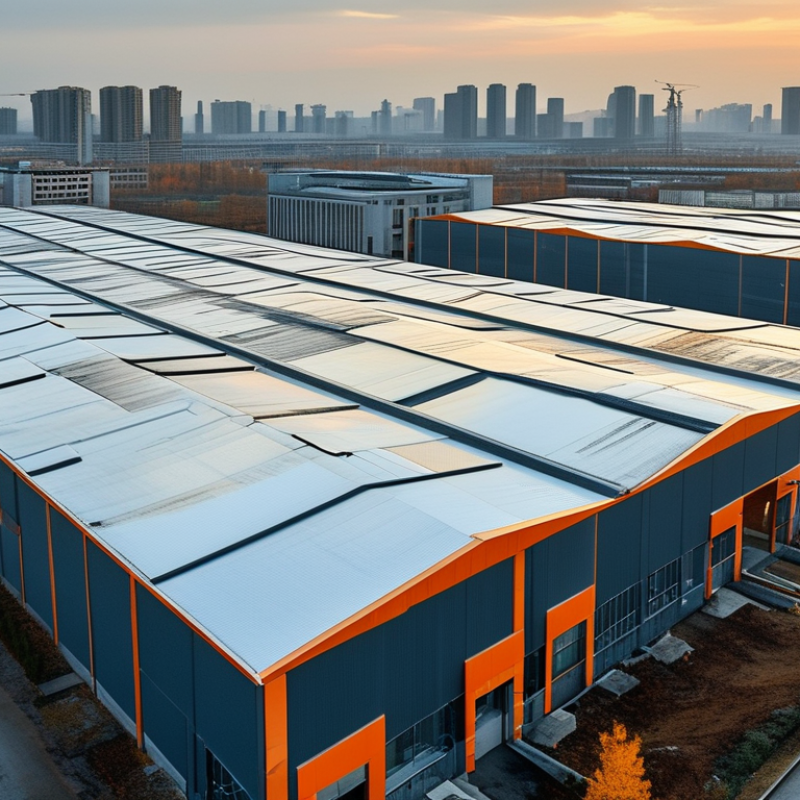
PIR sandwich roof panels combine two protective facings with a rigid polyisocyanurate foam core. The facings usually use coated steel or aluminum, while the core provides insulation and panel stiffness. This layered structure helps create a continuous roof surface with fewer thermal bridges than many separately assembled systems.
The core thermal conductivity commonly ranges from 0.022 to 0.028 W/m·K. Lower values can reduce the panel thickness needed for a target U-value. However, laboratory figures do not always match a completed roof. Temperature, aging, moisture, joints, fasteners, and installation quality can change real performance. A reliable assessment should review tested data, declared tolerances, and the project’s climate conditions.
Search terms may describe this product as Inuslation Roof Sandwich Panel Pir Foam Core, although the wording is imperfect. In practice, buyers should confirm the core density, facing thickness, joint design, and fire-performance classification. A tight tongue-and-groove connection can limit air leakage around panel edges. Clean cuts matter. Damaged foam or poorly sealed laps may create cold lines, condensation risks, and uneven interior temperatures. Field inspection remains valuable, because a precise datasheet cannot reveal every mistake made during installation.
China Top PIR Sandwich Roof Panel Manufacturers
Chinese PIR roof panel manufacturing starts with controlled raw materials. Polyisocyanurate foam needs stable chemical ratios, clean mixing, and accurate temperature control. Steel facings are checked for thickness, coating adhesion, and surface defects. Core density affects thermal performance, fire behavior, and panel strength. Small changes matter. Experienced technicians monitor viscosity and foam rise during every batch. They also record supplier data, storage conditions, and calibration dates. Moisture is a quiet risk, especially when materials wait in humid warehouses.
In a continuous line, roll forming, adhesive application, foaming, curing, cutting, and stacking follow one connected process. Sensors track line speed, panel thickness, and core temperature. Operators inspect edges while panels move past them. A clean joint is not guaranteed by automation alone. Manual checks still catch uneven locks, crushed foam, and misaligned facings. Production records should link each panel lot to its materials and test results. This traceability supports credible quality claims and faster corrective action.
Quality control should cover dimensional tolerances, thermal conductivity, bond strength, water absorption, and fire performance. Tests must follow project specifications and applicable regional standards. Independent laboratory verification adds useful confidence, but it cannot replace daily factory discipline. No process is flawless. A rushed cutting adjustment can create hidden gaps during installation. Manufacturers should review nonconformities honestly, rather than simply removing defective panels from reports. That habit reveals weak points in training, maintenance, or process design.
Increasing panel thickness generally lowers thermal transmittance. The indicative values below are calculated using a typical PIR core thermal conductivity of 0.022 W/m·K and standard internal and external surface resistances, without using company or brand data.
Typical production controls include consistent PIR foam density, uniform steel facings, continuous lamination, dimensional accuracy, adhesion strength, thermal conductivity, and fire-performance verification. Commercial sandwich panels are commonly assessed against EN 14509, while rigid polyurethane and PIR insulation products may also reference EN 13165 and ISO 9001 quality-management procedures.
Choosing a PIR sandwich roof panel requires more than comparing price or surface finish. Fire ratings should be checked against the exact core, joint design, and tested assembly. A panel may perform differently after roof sheets, fasteners, and penetrations are installed. Ask for current laboratory reports and declared test methods. Do not rely on a generic “fire resistant” label. It is too vague.
U-value indicates heat transfer through the panel. Lower numbers generally support better thermal control, but joints can weaken real results. Request declared U-values, thickness assumptions, and calculation conditions. Strength data should include span, load direction, deflection limits, and support spacing. A 50 mm panel is not automatically suitable for a windy warehouse roof. Design loads must be checked by qualified engineers.
Tips: Compare 40, 50, 75, and 100 mm options against the building’s climate and condensation risk. For OEM Pir Sandwich Roof Panel projects, confirm steel thickness, coating, edge profile, tolerances, and replacement availability. Inspect sample joints before bulk production. Small gaps matter. I have seen attractive specifications fail at connection details. That lesson is uncomfortable, but it improves procurement decisions.
| Panel Category | Typical Core Density | Available Thickness | Thermal Conductivity | Approximate U-Value* | Fire Performance | Typical Compressive Strength | Typical Roof Span Guidance | Common Applications |
|---|---|---|---|---|---|---|---|---|
| Standard PIR Roof Panel | 38–42 kg/m³ | 40, 50, 60, 75, 80, 100, 120, 150 mm | Approximately 0.022 W/m·K | Approximately 0.54 W/m²·K at 40 mm; 0.15 W/m²·K at 150 mm | Typically available with B-s1,d0 or B-s2,d0 classifications under EN 13501-1, depending on the complete panel assembly | Approximately 100–150 kPa at 10% deformation | Usually suitable for short to medium spans; final capacity depends on panel profile, support spacing, wind load, and snow load | Industrial buildings, warehouses, workshops, and commercial roofs |
| High-Density PIR Roof Panel | 42–48 kg/m³ | 50, 60, 75, 80, 100, 120, 150 mm | Approximately 0.022–0.024 W/m·K | Approximately 0.44 W/m²·K at 50 mm; 0.18 W/m²·K at 120 mm | Commonly tested to EN 13501-1; fire classification varies with facings, joints, coatings, and installation details | Approximately 120–180 kPa at 10% deformation | Provides improved resistance to maintenance loads and weather-related loading when correctly supported | Large-span industrial roofs, logistics facilities, and buildings exposed to higher service loads |
| PIR Panel with Premium Steel Facings | 38–45 kg/m³ | 50, 75, 100, 120, 150, 180, 200 mm | Approximately 0.022 W/m·K | Approximately 0.44 W/m²·K at 50 mm; 0.11 W/m²·K at 200 mm | May achieve B-s1,d0 or equivalent classifications when tested as a complete system; project certification is required | Approximately 100–160 kPa at 10% deformation | Suitable for applications requiring longer thermal service life and enhanced external durability | Cold-storage buildings, food-processing facilities, and high-performance commercial roofs |
| PIR Roof Panel with Concealed Fixings | 38–45 kg/m³ | 50, 60, 75, 80, 100, 120, 150 mm | Approximately 0.022–0.024 W/m·K | Approximately 0.45 W/m²·K at 50 mm; 0.16 W/m²·K at 150 mm | Fire performance is determined by the tested panel configuration, including joint design, sealants, facings, and roof build-up | Approximately 100–150 kPa at 10% deformation | Designed to reduce exposed fasteners; structural performance must be verified against the applicable design loads | Architectural roofs, offices, retail buildings, and projects requiring a clean external appearance |
| Low-Temperature PIR Roof Panel | 40–48 kg/m³ | 80, 100, 120, 150, 180, 200 mm | Approximately 0.022–0.024 W/m·K | Approximately 0.28 W/m²·K at 80 mm; 0.11 W/m²·K at 200 mm | Fire rating depends on the complete insulated roof system and cannot be determined from the core alone | Approximately 120–180 kPa at 10% deformation | Normally selected with thicker cores and reinforced joint details to limit heat loss and condensation risk | Chilled warehouses, temperature-controlled distribution centers, and process buildings |
| High-Wind-Load PIR Roof Panel | 42–50 kg/m³ | 60, 75, 80, 100, 120, 150 mm | Approximately 0.022–0.024 W/m·K | Approximately 0.37 W/m²·K at 60 mm; 0.18 W/m²·K at 120 mm | Fire classification must be confirmed through a valid system test or assessment for the selected panel and fixing arrangement | Approximately 140–200 kPa at 10% deformation | Used where uplift resistance, fastener pull-out, joint design, and support spacing require project-specific engineering | Coastal buildings, agricultural structures, airports, and exposed industrial sites |
| Fire-Performance-Oriented PIR Roof Panel | 40–48 kg/m³ | 60, 80, 100, 120, 150, 180 mm | Approximately 0.022–0.025 W/m·K | Approximately 0.36 W/m²·K at 60 mm; 0.15 W/m²·K at 150 mm | Often specified with documented reaction-to-fire results and, where required, fire-resistance testing of the complete roof assembly | Approximately 120–180 kPa at 10% deformation | Structural span and fire resistance are separate properties and must be checked independently during design | Public buildings, manufacturing plants, energy facilities, and projects with strict fire documentation requirements |
When evaluating China Pir Sandwich Roof Panel manufacturers, begin with verifiable production evidence. The IEA’s 2023 Global Status Report states that buildings consume about 30% of global final energy. Therefore, thermal performance deserves more attention than a low quotation. Request declared thermal conductivity, core density, panel thickness, and tested U-values. PIR cores often provide strong insulation, but results depend on joints, facings, and installation quality.
Inspect the factory, not only the showroom. Check continuous foaming equipment, steel-coil storage, adhesive control, and panel flatness. Ask for recent test reports covering fire reaction, dimensional stability, water absorption, and wind resistance under EN 14509 or equivalent standards. The European Commission identifies EN 14509 as a key standard for factory-made double-skin metal-faced panels. Certificates help, but they do not prove every production batch.
A useful audit includes random samples from finished pallets. Measure thickness at several points, inspect tongue-and-groove joints, and compare printed batch numbers with laboratory records. Confirm coating thickness and corrosion protection for the project’s climate. The World Steel Association’s 2024 sustainability data highlights steel’s importance in construction, yet recycled content and coating durability still vary by supply chain. I would also test a small shipment before placing a large order. It costs time. It may prevent expensive roof failures. Supplier communication matters too, although fluent English is not technical competence.
When evaluating PIR sandwich roof panel manufacturers in China, certification should begin with the project location and fire-safety requirements. GB standards support compliance with Chinese construction conditions, while EN 13501-1 classifies reaction to fire through European testing methods. These systems are not interchangeable. A panel passing one test may still require additional evidence for another market.
ASTM E84 measures flame spread and smoke development on a material surface. It does not replace full roof-system approval or local building regulations. Request current test reports, sample descriptions, thickness, joint design, and laboratory details. The tested panel should match the proposed product. Small changes matter. Core density, facing steel, adhesive, and joint seals can affect performance. Ask for traceable batch records, not only a scanned certificate.
ISO 9001 demonstrates a controlled quality-management system. It does not prove that every panel meets a required fire class. During factory assessments, inspect incoming raw materials, continuous production records, curing conditions, and dimensional checks. Check whether production staff understand corrective-action procedures. This practical evidence often reveals more than polished documents. Some manufacturers provide incomplete reports, and buyers may overlook expiry dates or untested configurations. That mistake is easy to make. Independent verification remains worthwhile, especially for warehouses, cold rooms, and large-span roofs where installation details influence real performance.
China Top PIR Sandwich Roof Panel Manufacturers serve cold stores, logistics warehouses, food plants, workshops, and agricultural buildings. PIR cores provide strong thermal resistance with relatively low panel weight. The IEA reports that buildings consume about 30% of global final energy. Therefore, roof insulation affects both operating costs and indoor temperature stability. In practice, installers should inspect joint tightness, roof slope, drainage, and fastener spacing. Small gaps can become large problems.
A well-designed PIR roof panel system may serve for 25–40 years under suitable conditions, according to technical guidance from the Polyisocyanurate Insulation Manufacturers Association. Service life depends on ultraviolet exposure, moisture, corrosion, loading, and maintenance.
Fire performance must be verified through relevant tests, not guessed from the core name. EN 14509 remains an important reference for factory-made structural sandwich panels in Europe. Still, laboratory results cannot fully represent careless installation. That point deserves attention.
For export projects, a capable Pir Sandwich Roof Panel Factory should provide stable dimensions, batch traceability, packing records, and clear technical drawings. Check production thickness, metal coating, core density, thermal conductivity, and tested fire classification. Export experience also requires moisture-resistant packaging and loading plans; damaged edges often appear after long sea transport. Ask for recent inspection records and project references in similar climates. A low quotation may hide thinner steel or weaker joint design. Manufacturer selection is not only a price decision.
: It has two protective facings and a rigid polyisocyanurate foam core. The facings are often coated steel or aluminum. The core provides insulation and panel stiffness.
Typical core values range from 0.022 to 0.028 W/m·K. Lower conductivity may allow a thinner panel for the same target U-value. Real roofs may perform differently.
Temperature, aging, moisture, joints, fasteners, and workmanship affect thermal performance. Poorly sealed edges can create cold lines and condensation risks. The datasheet cannot reveal every installation mistake.
Confirm core density, facing thickness, panel dimensions, joint design, and fire-performance classification. Check declared tolerances and tested configurations. Small differences matter.
A tight tongue-and-groove joint can reduce air leakage around panel edges. Clean cuts support better connections. Crushed foam or open laps may create uneven indoor temperatures.
Production commonly combines roll forming, adhesive application, foaming, curing, cutting, and stacking. Sensors can monitor thickness, line speed, and core temperature. Automation helps, but it is not perfect.
Useful checks include dimensional tolerances, thermal conductivity, bond strength, water absorption, and fire performance. Factory records should connect panel lots with materials and test results. Manual inspection still matters.
No. A certificate may not cover the proposed thickness, joint, facing, or core density. Request current reports, sample descriptions, laboratory details, and expiry dates. Independent verification can reveal overlooked gaps.
A PIR Sandwich Roof Panel combines rigid polyisocyanurate insulation with protective metal facings to provide a lightweight, durable, and energy-efficient roofing solution. Its core typically achieves thermal conductivity of approximately 0.022–0.028 W/m·K, helping reduce heat transfer and improve building energy performance. Chinese manufacturers commonly use automated continuous production lines, controlled raw materials, and quality systems to maintain consistent dimensions, bonding strength, and surface finish. Available options include different thicknesses, profiles, fire ratings, U-values, and load-bearing capacities for industrial, commercial, agricultural, and cold-storage buildings.
When evaluating manufacturers, buyers should review core density, panel strength, dimensional tolerances, production capacity, service life, packaging, technical support, and export experience. Compliance with relevant GB requirements, EN 13501-1 fire classifications, ASTM E84 testing where applicable, and ISO 9001 quality management can provide additional confidence. A reliable supplier should also offer clear test reports, practical customization, stable delivery, installation guidance, and solutions suited to local climate, building codes, and project requirements.